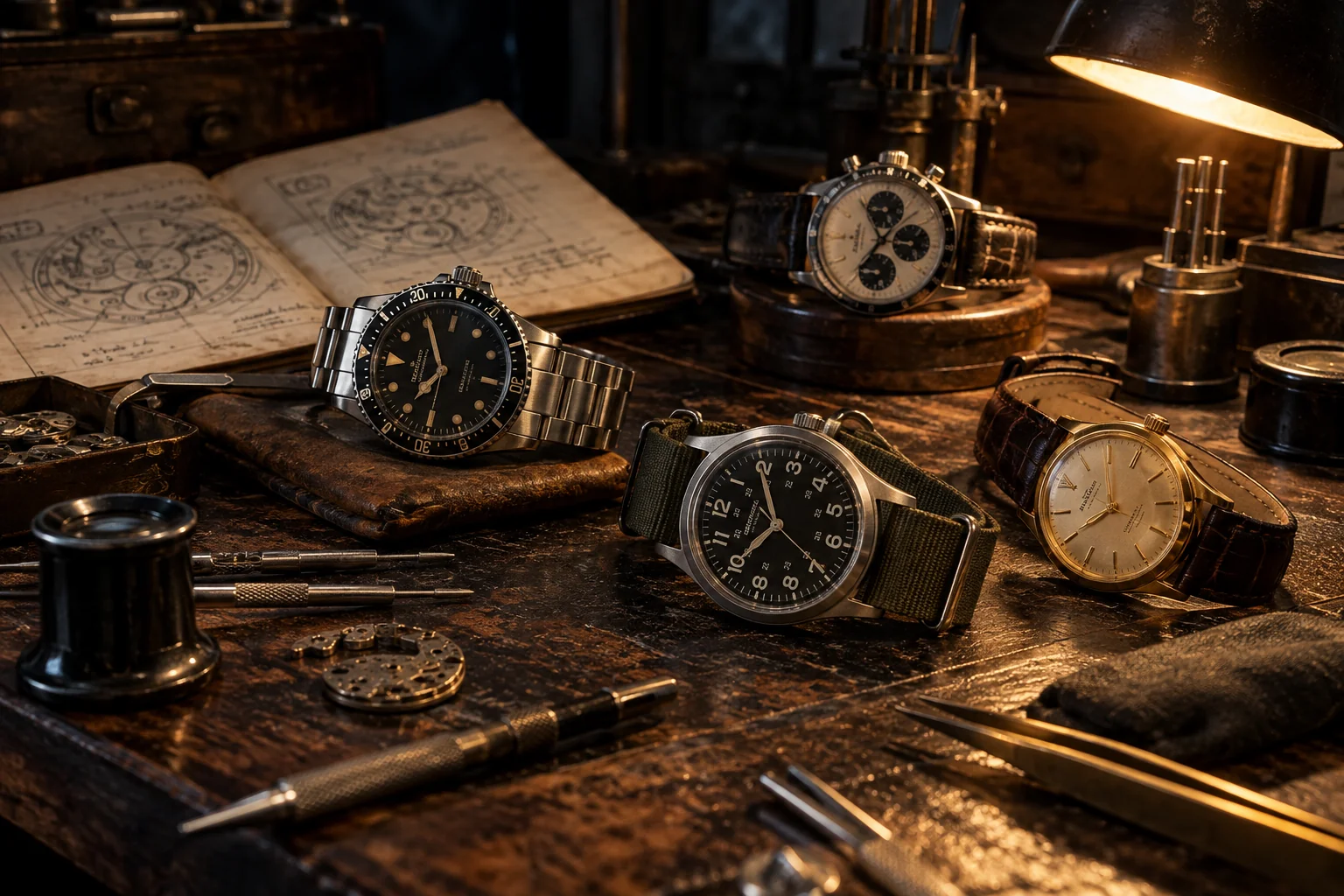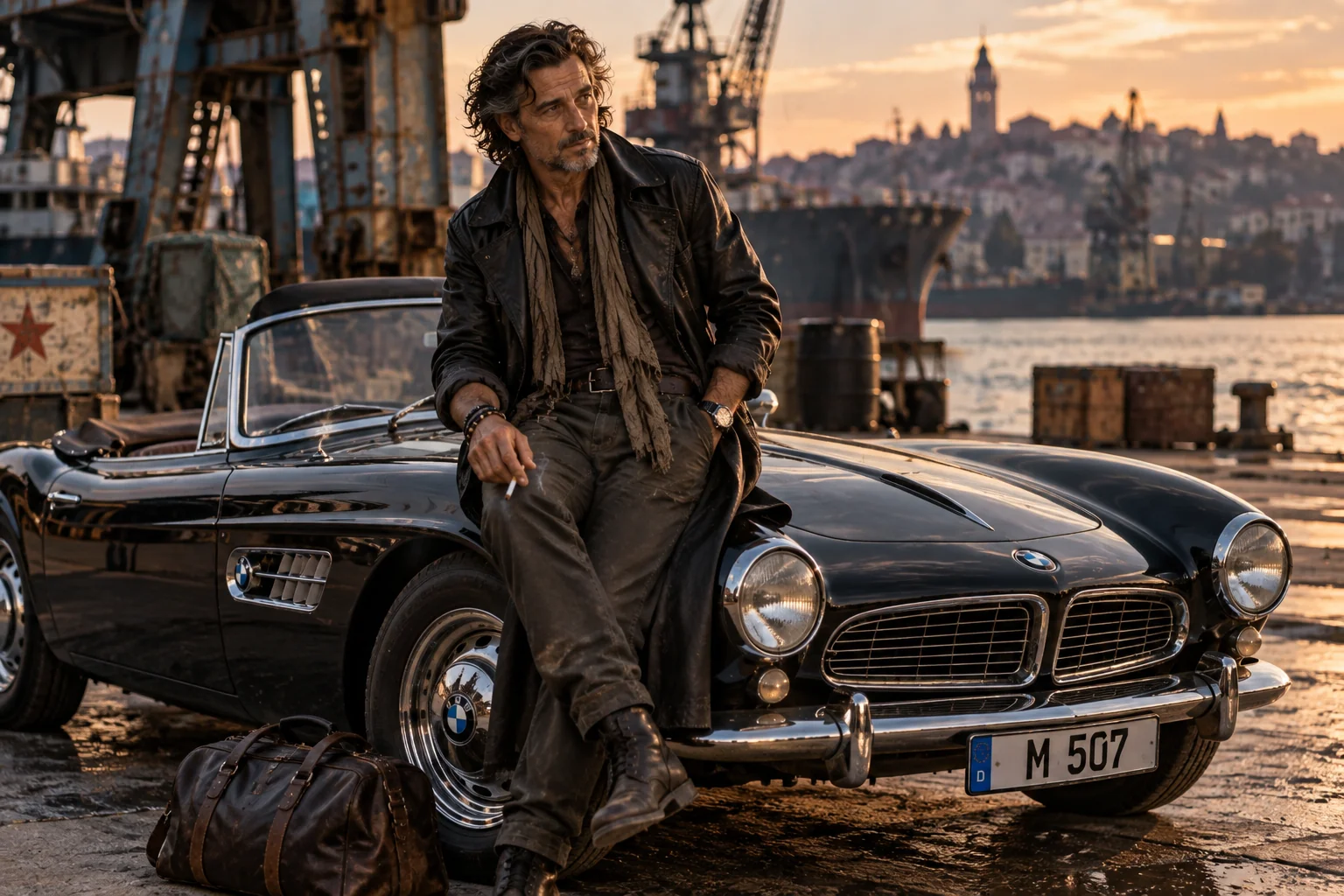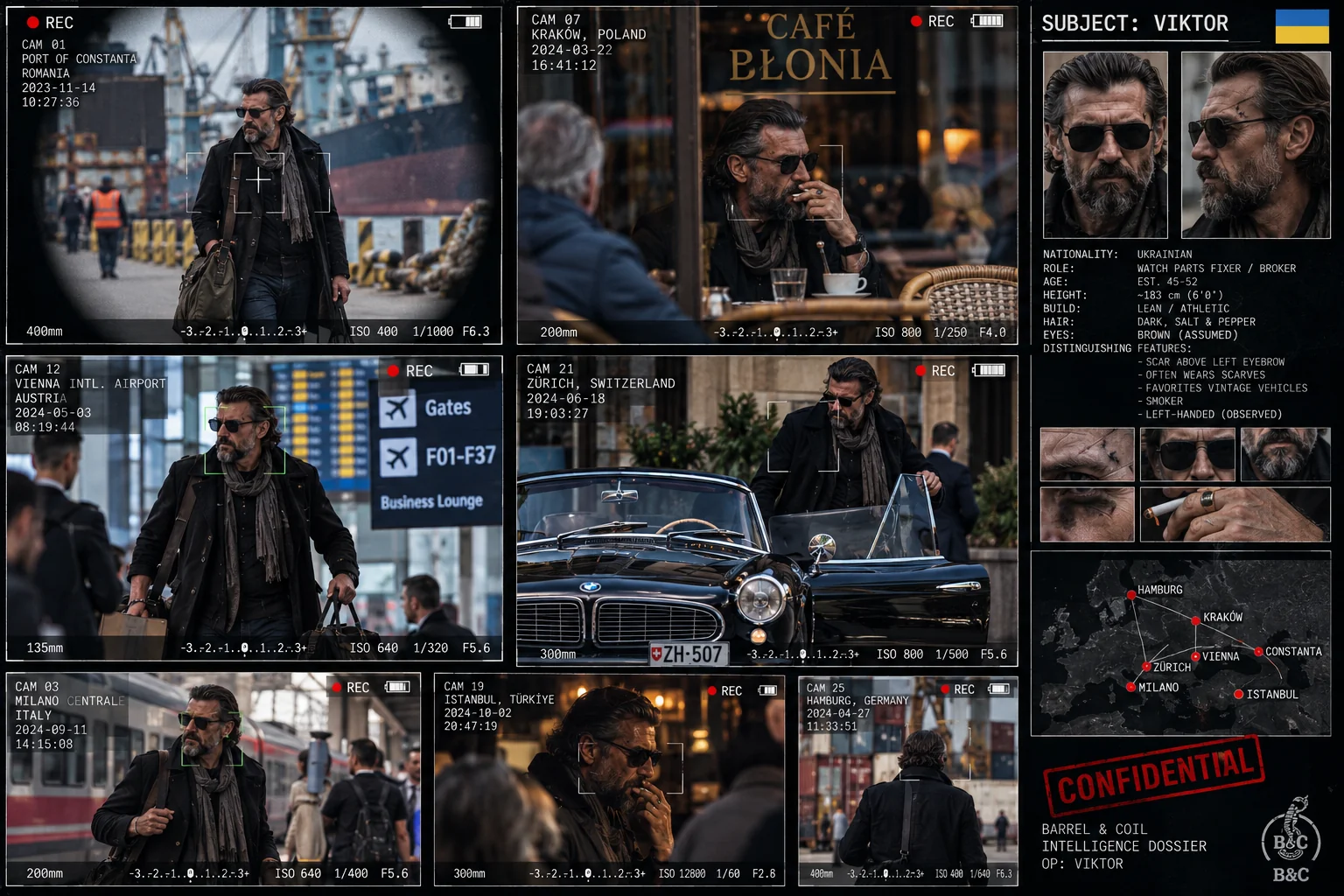
It is difficult to account for Viktor's movements during the second week of October. The accounts vary. One places him near Wilmington, Delaware, carrying a canvas bag that seemed heavier than its dimensions permitted. Another has him at a waterfront restaurant nearer the coast, discussing a watch with a man whose shirt belonged to a more cheerful century.
The only photograph that both witnesses agree upon is an ordinary one: an older man by a dock, an overcast afternoon, a stack of plastic shipping bins, and a white emergency vehicle parked across the lot. Few people noticed the vehicle. Those who did disagreed about whether it was still in service.
The white vehicle
It was an ambulance, or had been. The markings were bright enough to discourage close scrutiny, and the rear doors carried a curious amount of watch-related paraphernalia. A man walking past heard a brief metallic chime, followed by a voice discussing the condition of a “patient.” The patient, as he later discovered, was approximately forty millimeters wide.
Viktor appeared in the doorway for less than a minute. He handed over a small padded envelope and received a paper cup of coffee. The exchange looked so dull that nobody thought to photograph it.
For the record, the envelope did not contain anything dangerous or valuable enough to justify the attention it subsequently received. Its contents were a few repairable wristwatch movements, a handwritten parts list, and a note advising the recipient to check the balance staff before ordering anything.
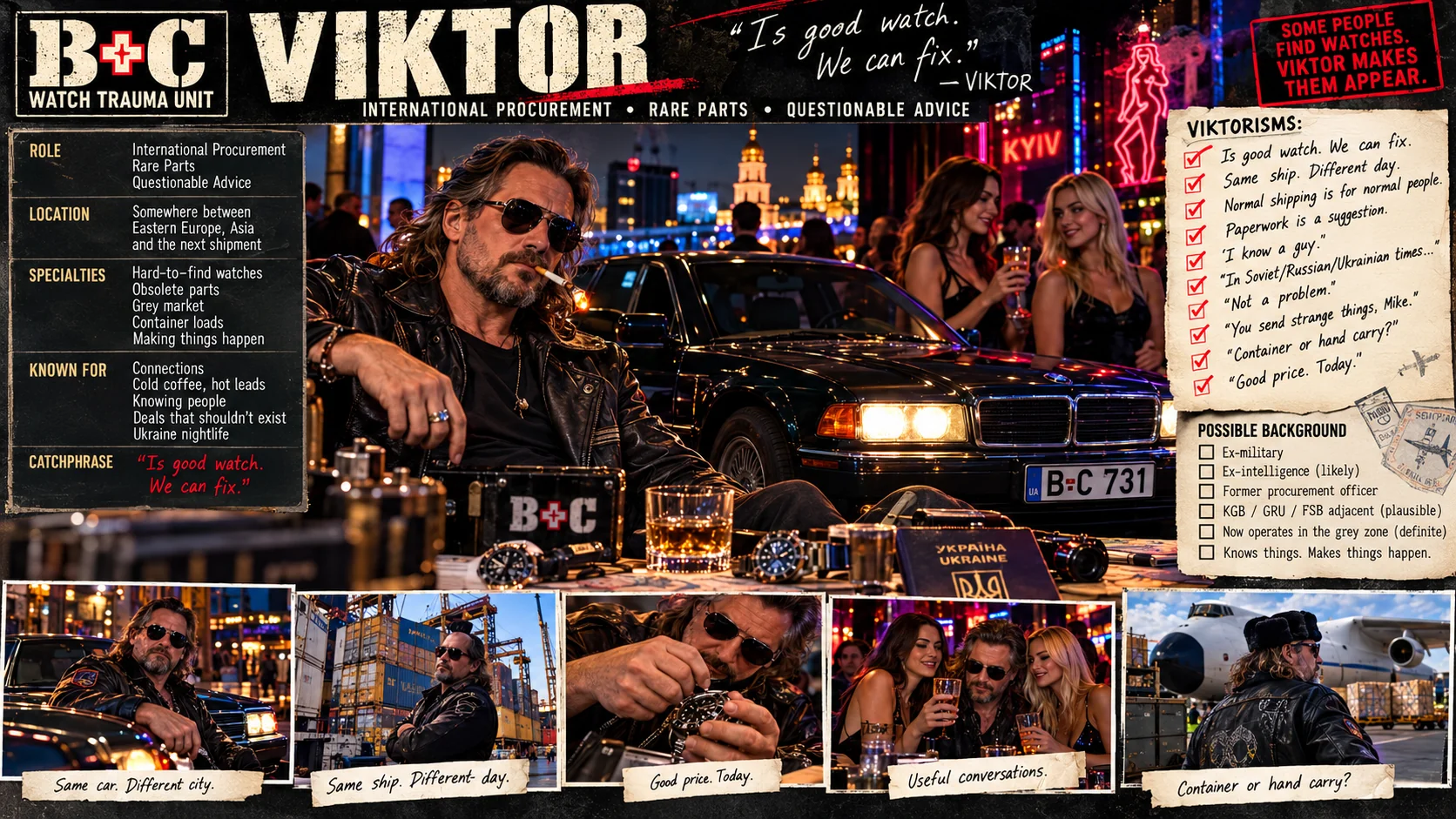
A peculiar professional arrangement
The man who accepted the package described his workplace as a Watch Trauma Unit. His visitors were not encouraged to take the title literally, although the quality of the paperwork suggested someone had once written military checklists for a living. Wristwatches arrived in small trays and departed, when fortune allowed, ticking.
Viktor was invited to stay for an inspection. He declined. He had another appointment, he said, and the appointment was not in Delaware. This was not strictly useful information.
What interested him was the ambition of the place. It was a workshop pretending to be a hospital, or a hospital pretending to be a film studio, or perhaps a small business with unusual set dressing. In any case, the mechanisms on the bench were real. That was enough.
“You have no idea what you're doing,” Viktor said after examining a complicated movement.
“Then you're in the right place,” replied the proprietor.
They understood one another perfectly.
The photograph's edge
The most intriguing detail of the surviving photograph is not Viktor at all. It is the clock visible through the ambulance's rear window. The hands indicate an oddly specific minute. No one has agreed whether it was set intentionally.
When asked why he had traveled so far to deliver a package worth so little, Viktor gave an answer typical of him: “The trip was not for the package.”
A second photograph is said to exist, showing him beside a black roadster at a nearby car gathering. It has not been entered into the public file. If one turns up, the editor will be interested.
An original fictional crossover with the Barrel & Coil Watch Trauma Unit. Descriptions do not represent actual medical activity.